


Ireland blends breathtaking landscapes and rich heritage with world-class education. This vibrant nation offers exactly what ambitious students seek—dynamic urban campuses, idyllic rural retreats, innovative research, and immersive academic experiences.
Students in Ireland benefit from a globally recognized curriculum, led by passionate educators and supported by cutting-edge facilities. Whether you’re pursuing technology, medicine, arts, or business, Ireland’s institutions deliver practical, career-focused learning that opens global opportunities.
AspireRise Ventures was founded with one goal: to remove the uncertainty, stress, and fragmentation from the international student journey. Every year, students face confusing procedures, inconsistent advice, and overwhelming paperwork as they plan their education and career abroad. We saw an opportunity to change that.
We offer expert visa consultancy, personalized mentorship, and career support to help you study, work, and thrive internationally with confidence.
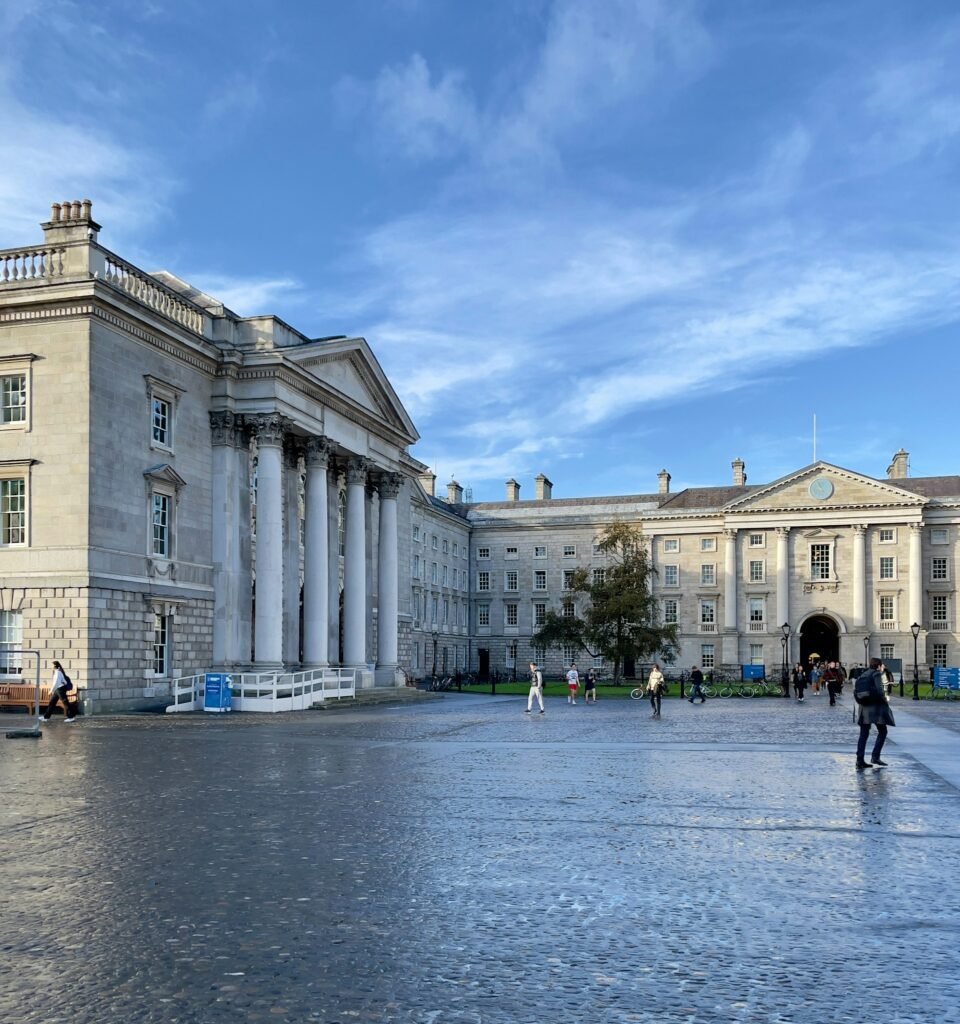
Key Facts at a Glance
Languages
Primary Language of Instruction: English is the main language used across all academic programs, making it accessible for international students. Native Language: Irish (Gaeilge) is also an official language and is taught in schools, though it’s less commonly used in higher education and daily life outside of Gaeltacht regions. Tuition Fees Undergraduate Programs: Range from €10,000 to €25,000 per year, depending on the university and course of study. Postgraduate Programs: Typically between €12,000 and €30,000 per year. Courses in fields like business, engineering, and medicine may have higher tuition. Note: Tuition costs may vary significantly based on the institution and program type (e.g., STEM vs. Humanities).Scholarships & Funding
☆ Government Scholarships: Ireland offers a range of scholarships such as the Government of Ireland International Education Scholarship (GOI-IES), which covers full tuition and living expenses.
☆ University-Specific Scholarships: Many universities, including Trinity College Dublin and University College Dublin, offer merit-based and need-based financial aid to international students.
☆ Private & EU Grants: Additional options include funding from EU partnerships, research bodies, and private institutions.
Language Tests
- Accepted English Proficiency Exams:
- IELTS (minimum score generally 6.0–6.5)
- TOEFL (iBT score typically 80–90+)
- PTE Academic
- Cambridge English Qualifications (such as CAE and CPE)
- Exemptions: Some students may be exempt if they have previously studied in English-medium institutions.
Degrees Offered
Undergraduate Degrees: Typically three to four years, depending on the field.
PhD Programs: Commonly three to four years with a strong focus on original research.
Graduate Diplomas & Certificates: Short-term programs that provide specialization or upskilling in a focused area.
Academic Intakes
Main Intakes:
☆ September (major intake for most programs)
☆ January (offered by select institutions and courses, especially postgraduate)
Application Deadlines: Usually fall between February and July for September intake and between September and November for January intake.
Visa Requirements:
- Student Visa: Non-EU/EEA students must apply for a D-type study visa.
- Documents Typically Required:
- Proof of admission
- Proof of finances (minimum €10,000 for living expenses annually)
- English proficiency test scores
- Valid passport and passport-sized photographs
- Medical/travel insurance
- Post-Study Work Opportunities: Under Ireland’s Third Level Graduate Scheme, graduates can stay up to 1–2 years to seek employment or apply for a work visa.
Popular Study Streams
1. Medicine & Healthcare
Overview: Ireland has a strong global reputation for its medical education, offering comprehensive training, clinical placements, and research opportunities.
Popular Courses: Medicine (MB BCh BAO), Nursing, Pharmacy, Public Health, Biomedical Science, Physiotherapy.
Top Institutions: Royal College of Surgeons in Ireland (RCSI), University College Dublin (UCD), Trinity College Dublin (TCD).
Career Prospects: Opportunities in hospitals, research, pharmaceuticals, and public health organizations both in Ireland and globally.
2. Business & Finance
Overview: Ireland, home to global financial hubs and multinational corporations, is an ideal destination for studying business and finance.
Popular Courses: Business Administration (MBA), Accounting, Finance, International Business, Economics, Marketing, Supply Chain Management.
Top Institutions: Trinity Business School, UCD Michael Smurfit Graduate Business School, Dublin City University (DCU).
Career Prospects: High employability in areas such as banking, consulting, fintech, and management roles within multinational companies.
3. IT & Computer Science
Overview: With tech giants like Google, Apple, and Microsoft headquartered in Ireland, there’s a booming demand for IT professionals.
Popular Courses: Computer Science, Artificial Intelligence, Data Analytics, Cybersecurity, Software Engineering, Cloud Computing.
Top Institutions: University of Galway, Technological University Dublin, University College Cork.
Career Prospects: Roles in software development, IT consulting, data science, cybersecurity, and AI research with strong post-study work opportunities.
4. Engineering
Overview: Engineering is a cornerstone of Ireland’s higher education, aligned with its growing infrastructure and manufacturing sectors.
Popular Courses: Mechanical, Civil, Electrical, Electronic, Chemical, and Biomedical Engineering.
Top Institutions: Trinity College Dublin, University of Limerick, Cork Institute of Technology.
Career Prospects: Strong prospects in design, construction, manufacturing, and technology-driven industries.
5. Environmental Science
Overview: Ireland’s lush landscape and commitment to sustainability have fostered excellent programs in environmental science and sustainability.
Popular Courses: Environmental Science, Sustainability Studies, Climate Change, Marine Biology, Renewable Energy.
Top Institutions: University College Dublin, University College Cork, Maynooth University.
Career Prospects: Roles in environmental policy, conservation, renewable energy, environmental consultancy, and research.
6. Humanities & Literature
Overview: Ireland’s rich cultural heritage and literary legacy make it a great place to study the humanities.
Popular Courses: English Literature, History, Philosophy, Cultural Studies, Linguistics, Political Science.
Top Institutions: Trinity College Dublin (home of Oscar Wilde and Samuel Beckett), University College Galway, Maynooth University.
Career Prospects: Careers in academia, publishing, journalism, public relations, cultural institutions, and education.
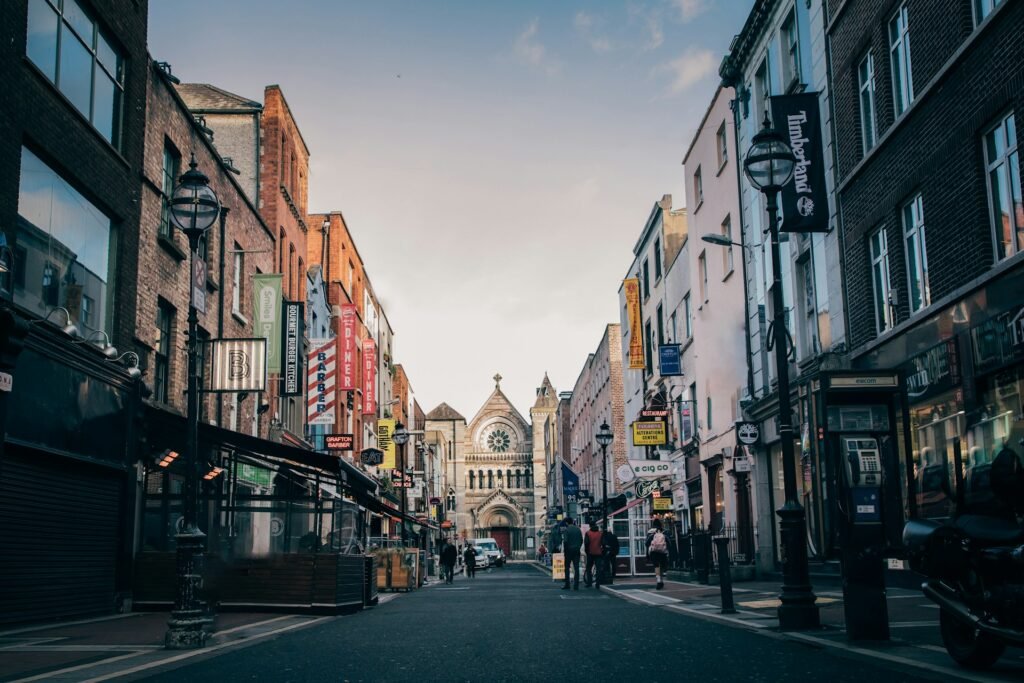
Benefits of Studying in Ireland
1. Elite Universities: Globally respected, producing industry-ready graduates.
2. Cutting-Edge Research: Access innovative facilities in tech, medicine, and business.
3. International Community: Network with peers worldwide.
4. Post-Study Career Options: 2-year stay-back visa and job opportunities.
5. Rich Course Variety: Programs in IT, literature, medicine, and more.
6. Safe & Welcoming: High global safety ranking.
7. Gateway to Europe: EU member with work/travel benefits.
8. Cultural & Natural Splendor: Live history and explore lush landscapes.
Admission Requirements
✅ Undergraduate Programs
- High school diploma or equivalent
- Academic transcripts
- Personal essay or statement
- 1–2 reference letters
- Proof of English proficiency (e.g., IELTS, TOEFL)
✅ Graduate (Master’s) Programs
Bachelor’s degree
Transcripts of academic records
Statement of Purpose (SOP)
CV or resume
2 reference letters
Research proposal (if applicable)
English language test score (e.g., IELTS 6.5+)
✅ Doctorate (PhD) Programs
- Master’s degree in a relevant field
- Research proposal
- Academic transcripts
- CV with research experience
- 2–3 academic references
- Publications (if available)
- English proficiency proof (IELTS 6.5–7.0 or equivalent)
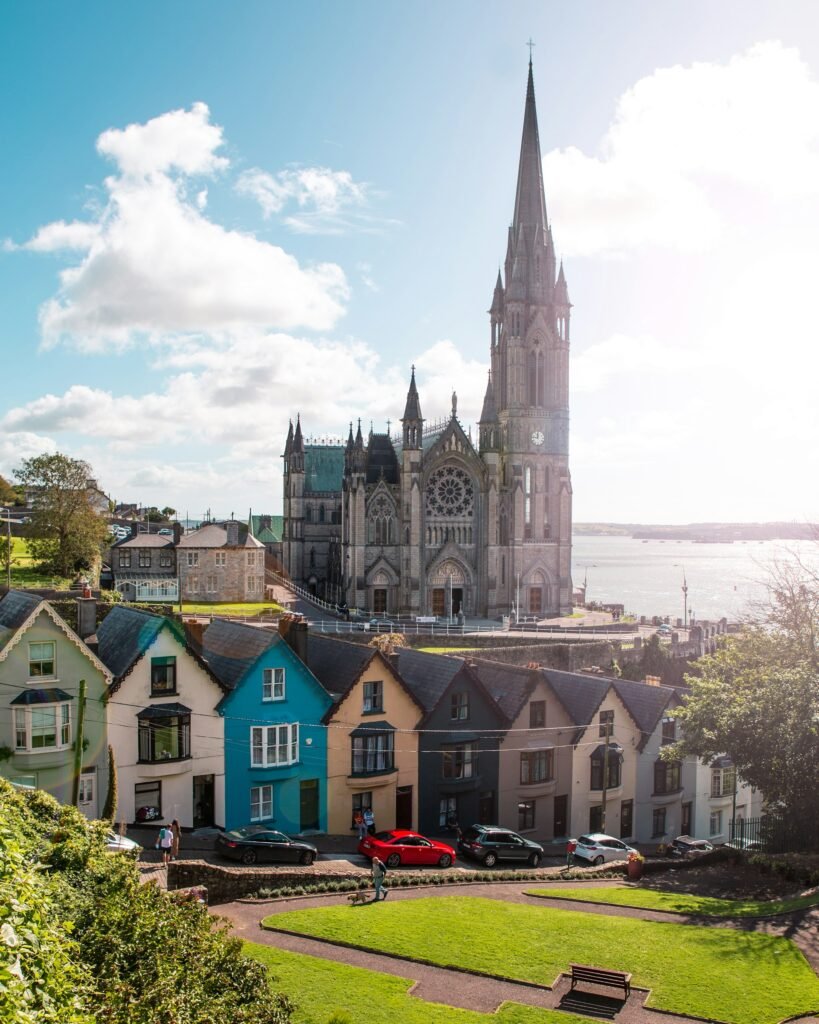
Admission Requirements
Essential Documents Checklist
To ensure a smooth admission and visa process, students must prepare the following documents in advance:
- Valid Passport: Must remain valid for the duration of your study in Ireland.
- Academic Records: Certified copies of transcripts and certificates from previous education (high school, bachelor’s, etc.).
- Curriculum Vitae (CV) or Resume: Especially important for graduate and postgraduate applications to showcase academic, professional, and extracurricular achievements.
- Letters of Recommendation: Usually from teachers, professors, or employers who can vouch for your academic and/or professional competence.
- Statement of Purpose (SOP): A personal essay explaining your interest in the course, future goals, and why you chose Ireland.
- English Language Test Scores: IELTS, TOEFL, PTE, or Cambridge English—required by most universities.
- Entrance Exams (if applicable): Some competitive programs may require GRE, GMAT, or other standardized tests.
Top Universities in Ireland
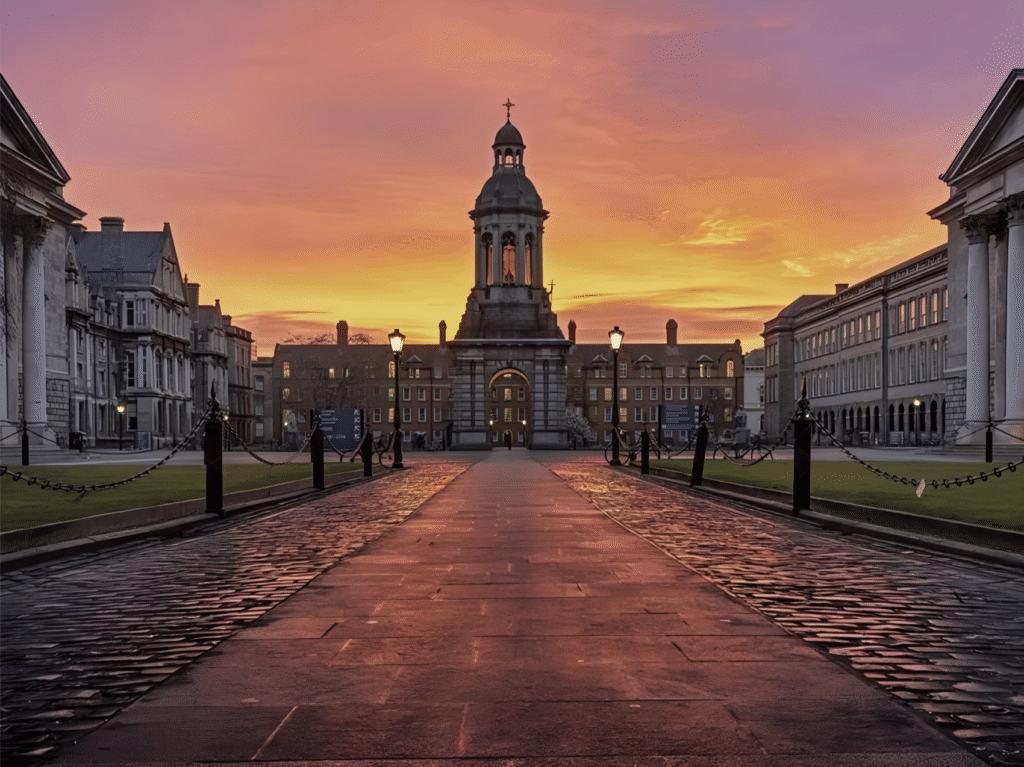
1. Trinity College Dublin (TCD)
QS World Ranking: 81
Times Higher Education (THE): 161
Highlights:
- Ireland’s oldest and most prestigious university, founded in 1592.
- Known for strong programs in humanities, sciences, and technology.
- Home to the famous Long Room Library and the Book of Kells.
- Excellent research output and global collaborations.

2. University College Dublin (UCD)
QS World Ranking: 171
THE Ranking: 201–250
Highlights:
- Ireland’s largest university with a strong global focus.
- Renowned for business, engineering, agriculture, and health sciences.
- Houses UCD Michael Smurfit Graduate Business School (internationally ranked).
- A member of Universitas 21, a global network of research universities.
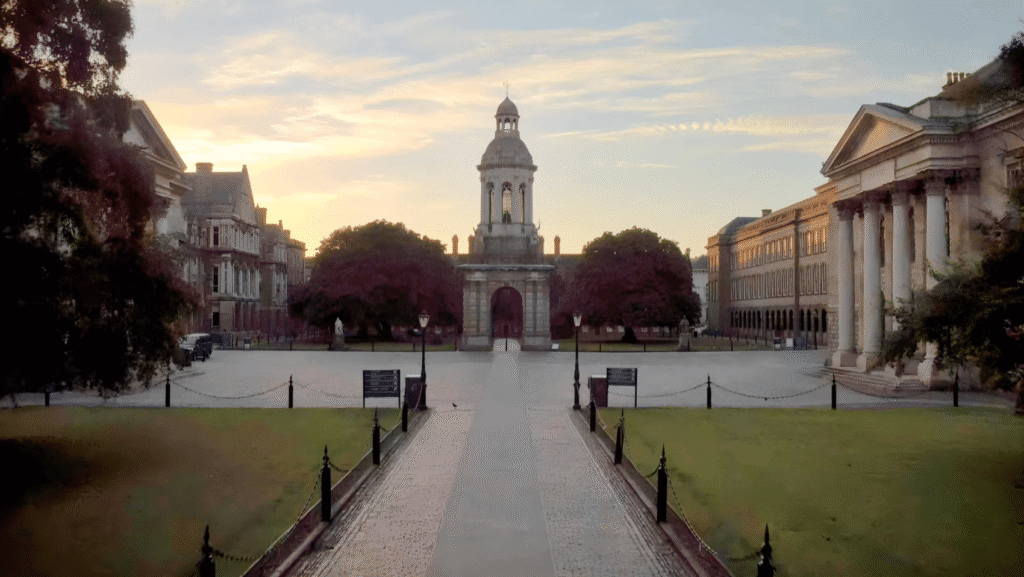
3. University of Galway (formerly NUI Galway)
QS World Ranking: 289
THE Ranking: 301–350
Highlights:
- Located on Ireland’s scenic west coast.
- Strong in medical and health sciences, marine science, and arts.
- Known for vibrant student life and community engagement.
- Emphasis on innovation, sustainability, and interdisciplinary research.
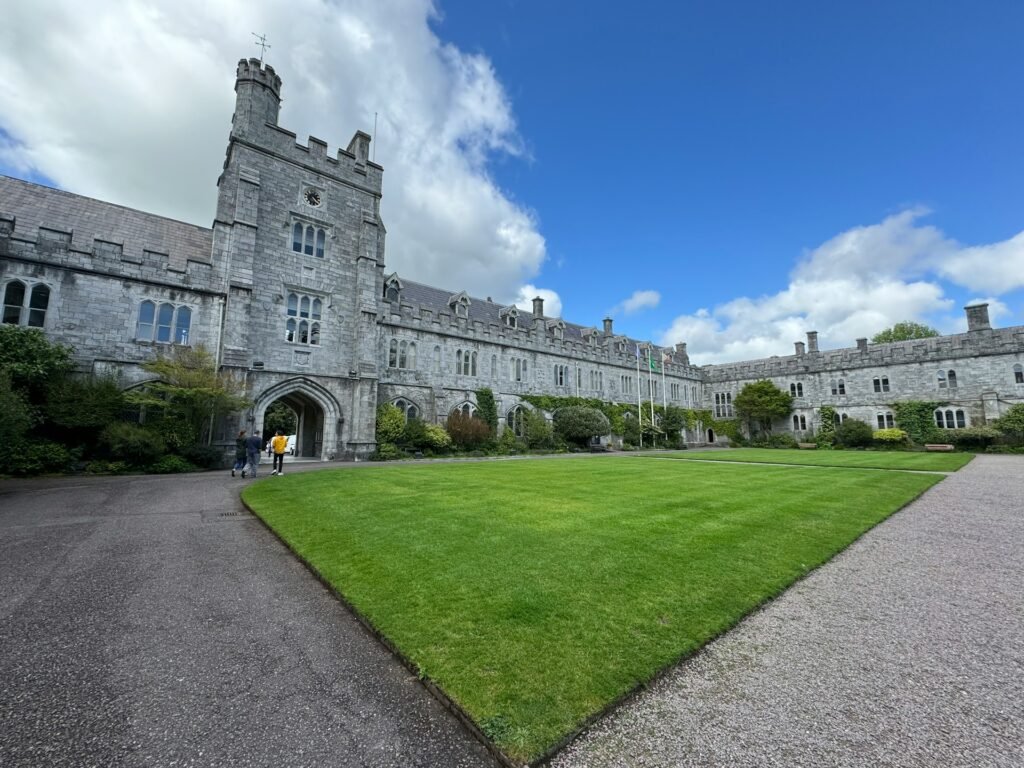
4. University College Cork (UCC)
QS World Ranking: 292
THE Ranking: 301–350
Highlights:
- Awarded Ireland’s first “Green Campus” status.
- Strong research output in food science, energy, and environmental studies.
- Offers a wide range of undergraduate and postgraduate programs.
- Located in the cultural and historical city of Cork.
5. Dublin City University (DCU)
QS World Ranking: 436
THE Ranking: 401–500
Highlights:
- Young, dynamic, and innovation-driven.
- Known for engineering, communications, business, and computing.
- Strong industry links and excellent graduate employability rates.
- Focus on applied research and entrepreneurship.
6. Maynooth University
QS World Ranking: 801–850
THE Ranking: 401–450
Highlights:
- Ireland’s fastest-growing university.
- Strong in arts, humanities, education, and social sciences.
- Located just outside Dublin, offering both campus charm and city access.
- Known for academic support and student satisfaction.
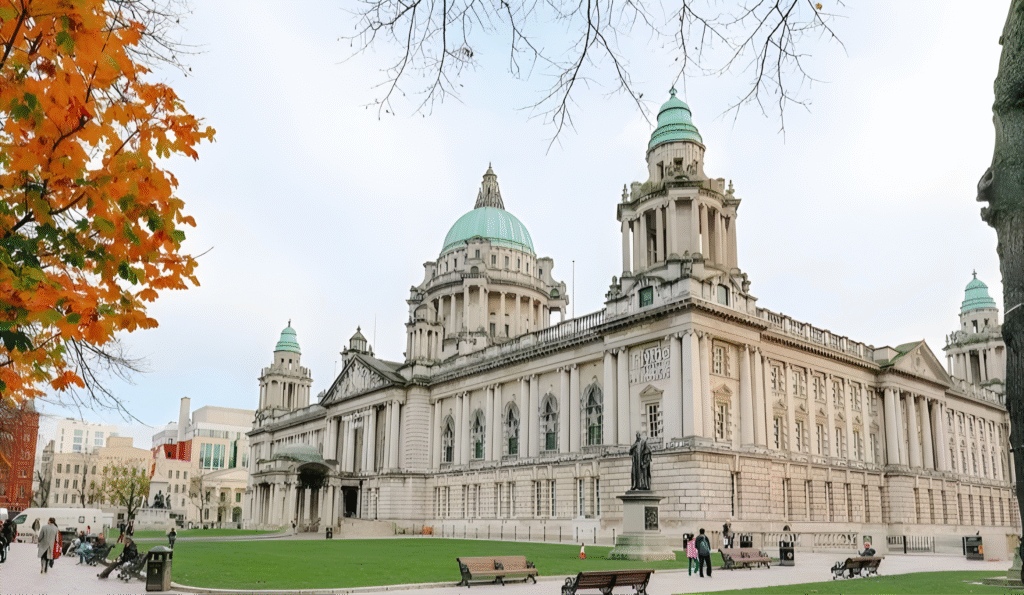
7. Technological University Dublin (TU Dublin)
QS World Ranking: 851–900
THE Ranking: 1001–1200
Highlights:
- Ireland’s first Technological University, formed by merging several institutes.
- Focuses on practical, career-oriented education in fields like design, engineering, IT, and culinary arts.
- Strong ties to industry and excellent facilities across multiple campuses.
- Promotes applied research and innovation for societal impact.
Visa Requirements to Study in Ireland
International students must apply for a D-Type Study Visa to pursue full-time education in Ireland. Below are the typical visa requirements:
- ✅ Valid Passport: Must have sufficient validity and blank pages.
- ✅ Letter of Acceptance/Offer: From a recognized Irish institution.
- ✅ Proof of Financial Means: To show you can cover tuition fees and living expenses (generally €7,000–€12,000 per year).
- ✅ Private Medical Insurance: Must be valid in Ireland.
- ✅ Passport-size Photographs: That meet biometric and Irish visa standards.
- ✅ Completed Visa Application Form: Along with visa fees (typically €60–€100).
- ✅ Statement of Purpose or Return Intention Letter: Confirming you will leave Ireland after your studies.
- ✅ Proof of Accommodation: Or address details in Ireland.
- ✅ Police Clearance Certificate and Medical Examination Report: Required for some nationalities.
- ☆ Maynooth University Scholarships
Offered by: Maynooth University
Value: €5,000 - ☆ LIT International Bursary
Offered by: Technological University of the Shannon (Limerick Institute of Technology)
Value: €4,000 - ☆ Cork Institute of Technology Merit Awards
Offered by: Munster Technological University (formerly CIT)
Value: €6,000 - ☆ IT Sligo International Bursary
Offered by: Atlantic Technological University
Value: €5,000 - ☆ DIT Centenary Scholarship Program
Offered by: Technological University Dublin
Value: €10,000
Academic Intake Periods in Ireland
Irish universities generally have two main intakes for international students:
- ☆ September Intake (Fall Term):
Most popular intake for all major programs.
Application deadline: Typically by July.
Scholarship deadlines may fall earlier (around March–May). - ☆ January Intake (Spring Term):
Limited programs, mainly in business, IT, and some engineering.
Estimated Cost Summary
- Personal/Leisure Expenses: €300 – €400
- Estimated Monthly Total: €1,800 – €2,200
- Annual Total Living Cost: ~€20,000 – €26,000
Post-Study Work Opportunities in Ireland
Ireland offers excellent post-study work prospects, especially in high-demand fields such as technology, healthcare, and engineering.
Stay-Back Visa Options
- Bachelor’s Degree Graduates: Eligible for a 1-year stay-back visa (Third Level Graduate Scheme).
- Master’s & PhD Graduates: Eligible for a 2-year stay-back visa.
Cost of Studying in Ireland
Tuition Fees (Per Year)
- Undergraduate (UG): €10,000 – €25,000
- Postgraduate (PG): €10,000 – €30,000
- PhD / Research Degrees: €9,150 – €24,000
Living Expenses in Ireland (Monthly Estimate)
- Rent: €1,000
- Utilities (Electricity, Internet, etc.): €150
- Food & Groceries: €300
- Transport: €100
- Leisure & Miscellaneous: €350
Approximate Total Monthly Living Cost: €1,900
Average Salaries by Field (Annual Estimate)
- Medicine & Healthcare: €80,000+
- IT & Computer Science: €70,000+
- Engineering: €65,000+
- Business & Finance: €60,000+
- Environmental Sciences: €55,000+
- Humanities & Arts: €50,000+
Top Scholarships for International Students
- ☆ Government of Ireland International Education Scholarship
Offered by: Government of Ireland
Value: €10,000 stipend + full tuition fee waiver - ☆ UCD Global Excellence Scholarship
Offered by: University College Dublin
Value: €5,000 – €10,000 - ☆ Trinity College Dublin Scholarships
Offered by: Trinity College Dublin
Value: €5,000 – €10,000 - ☆ NUI Galway Merit Scholarship
Offered by: University of Galway
Value: €5,000 - ☆ DCU International Student Scholarships
Offered by: Dublin City University
Value: Up to €7,000